
Whey Protein Market Overview Analysis By Fortune Business Insights
Market Snapshot
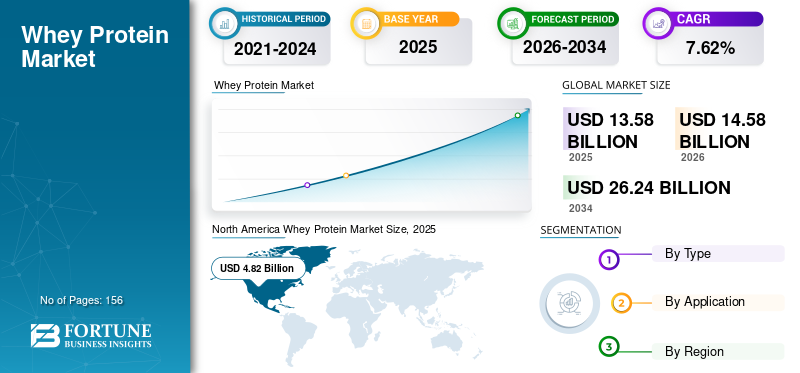
According to Fortune Business Insights: The global whey protein market is on a strong upward trajectory. Valued at USD 11.79 billion in 2023, it is projected to climb from USD 12.64 billion in 2024 to USD 22.63 billion by 2032, reflecting a compound annual growth rate (CAGR) of 7.5% over the forecast period. This robust expansion is underpinned by rising health consciousness, growing sports nutrition demand, and increasing product innovation across food, beverage, and personal care sectors.
Get a Sample Research PDF: https://www.fortunebusinessinsights.com/enquiry/request-sample-pdf/106555
Key Market Drivers
Rising Preference for High-Protein Diets
Consumer adoption of protein-rich diets has surged in recent years. Busier lifestyles have led many individuals to rely on packaged and fortified food products to meet their nutritional needs. The growing prevalence of chronic illnesses linked to sedentary routines, combined with fitness trends — especially among millennials — has accelerated the shift toward protein supplementation. Additionally, the issue of child malnutrition in African nations has prompted greater emphasis on protein-dense ingredients, further broadening demand.
Sports Nutrition Expansion
Whey protein is a cornerstone of sports nutrition. Athletes, bodybuilders, and gym enthusiasts rely on it for muscle building, endurance support, and post-workout recovery. Its popularity in powder form stems from its convenience, long shelf life, portability, and ease of mixing with water or milk. As participation in outdoor sports and recreational activities grows globally — particularly among younger and older age groups in the U.S., Germany, and Japan — demand for protein supplements continues to climb.
Personal Care Industry Growth
An emerging driver is the rising use of whey protein in premium personal care and cosmetics products. Growing hygiene awareness, beauty consciousness, and increasing consumer preference for natural and herbal skincare ingredients are fueling demand. Urban consumers with rising disposable incomes are driving uptake of high-end skincare products enriched with protein-based ingredients.
Post-COVID Recovery and Health Awareness
The COVID-19 pandemic disrupted supply chains but paradoxically heightened awareness around health, immunity, and active lifestyles. The market rebounded strongly, registering 7.07% growth in 2020 versus 2019, and has since maintained healthy momentum driven by a V-shaped recovery, particularly in emerging economies.
Market Restraint
Plant-Based Protein Competition
The primary challenge facing the whey protein market is the rapidly growing demand for plant-based protein alternatives. Products derived from soy, pea, rice, wheat, hemp, and algae are gaining significant traction — especially among vegan consumers in Europe and health-conscious individuals globally. Innovations in plant protein formulations that replicate the functional benefits of whey (amino acid profiles, muscle repair support, weight management) are increasingly substituting animal-derived proteins.
Segmentation Overview
By Type
- Concentrates hold a dominant share, widely used in beverages, dairy desserts, yogurt, meat-based foods, and infant nutrition products.
- Isolates represent a premium, higher-purity segment popular in sports nutrition.
By Application
- Food & Beverages leads the market, with whey protein integrated into dairy, bakery, energy drinks, and confectionery products as a stabilizer, flavor enhancer, and emulsifier.
- Animal Feed and personal care represent growing secondary applications.
Regional Highlights
| Region | Outlook |
|---|---|
| North America | Largest market share, driven by strong health awareness and high protein supplement consumption |
| Europe | Steady growth led by the U.K., Germany, and France; rising use in personal care and food processing |
| Asia Pacific | Fastest growing region; driven by dairy protein exports, aging populations, and booming personal care demand in India and Australia |
| Central & South America | Expanding personal care industry boosting protein ingredient demand |
Connect with Our Expert for any Queries: https://www.fortunebusinessinsights.com/enquiry/speak-to-analyst/106555
Competitive Landscape
The market is moderately consolidated, with a limited number of established players dominating global supply. Key companies include Glanbia plc, Fonterra Co-operative Group, Arla Foods, Saputo Inc., Hilmar Cheese Company, LACTALIS Ingredients, Carbery Group, and Wheyco GmbH, among others.
Recent developments reflect a focus on capacity expansion and innovation:
- FrieslandCampina launched Nutri Whey ProHeat, a heat-stable ingredient for medical nutrition (November 2023).
- Fonterra's NZMP introduced a Grade A whey protein concentrate for cultured dairy (June 2022).
- Arla Foods unveiled a five-year sustainability strategy emphasizing responsible dairy production (November 2021).
Conclusion
The global whey protein market presents compelling growth opportunities through 2032, anchored by health and wellness megatrends, sports nutrition demand, and product diversification into personal care. While plant-based protein competition poses a structural challenge, ongoing innovation in formulation, sustainability, and application breadth positions whey protein as a durable and evolving segment within the broader protein ingredients landscape.